





From Firewood Aroma to Electric Aesthetics: The Evolution of the Modern Bread Kiln
Many newly established or expanding baking brands share the same frustration: they invest heavily in importing equipment, yet their bread never delivers the “soulful flavor” they envisioned. Weak aroma, cracked crusts, uneven color, and uncontrollable heat—these issues either drive customers away in disappointment or leave bakers constantly struggling with the oven. These seemingly small differences all trace back to one overlooked piece of equipment: the bread oven. Equipment is the foundation, but the fire is the soul. A truly “baking-savvy” oven is often the starting point for elevating a brand’s quality.
Rewind a few decades, and bread ovens were nothing more than primitive wood-fired kilns. Back then, whether in the streets of Europe or in small Chinese towns, the dancing flames in a bakery’s chamber always endowed bread with a natural charred aroma and a warm, gentle flavor. Fire was controlled entirely by human skill, and experience reigned supreme. The crackle of burning wood and the fermenting scent of dough intertwined into the most primal memory of warmth. But because of this extreme dependence on fire control, product consistency was poor, efficiency was low, and it could never support the high-frequency demands of modern commerce.
After the Industrial Revolution, electricity entered the baking process, ushering ovens into the era of electric heating elements. This shift greatly improved temperature controllability and efficiency, making mass production possible. Yet it also brought a downside: bread’s texture became monotonous, aromas less natural. In markets that prize artisanal quality, the “standardization” of electric ovens became a shackle limiting flavor complexity. Heat sources were strong, but distribution uneven. Inside the oven, temperature varied wildly, and recreating the soulful warmth of a wood-fired kiln became a generational challenge.
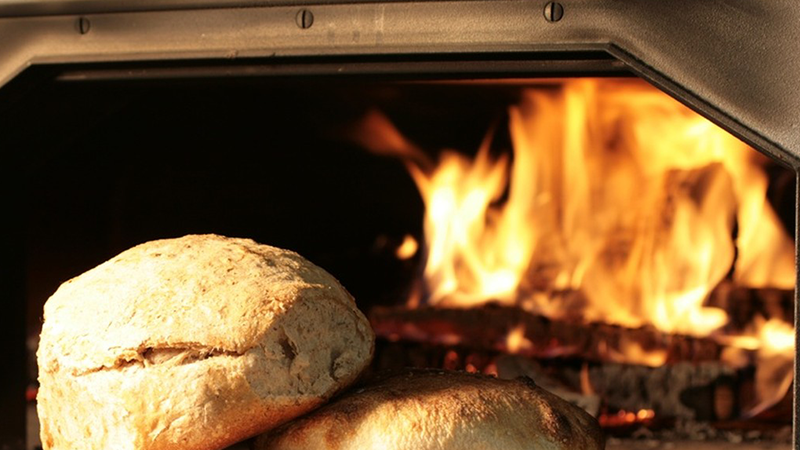
It wasn’t until the past decade that modern bread kilns truly embarked on a path of technological fusion. While preserving the heat-retention qualities of traditional kilns, they introduced intelligent control systems, high-efficiency thermal reflection structures, and humidity regulation mechanisms—creating “modern kilns” that balance efficiency with flavor. This evolution is no longer a mere energy substitution; it is a digital reinvention of the “art of fire.” From the random leaps of wood flames to the precise pulses of electric power, the bread world has undergone a quiet transformation.
Modern bread kilns are designed with an inner chamber that distributes heat in a surrounding pattern, transferring warmth from the inside out in layers, ensuring the dough rises evenly in every dimension. Paired with highly sensitive temperature control systems, every degree of change inside the oven can be monitored, guaranteeing consistent results in every bake. Equally important is the control of humidity balance, which allows the crust to form the perfect golden crisp while retaining interior moisture—delivering the ultimate contrast of a crunchy exterior and a soft, fluffy heart.
From the aroma of firewood to the aesthetics of electric power, the evolution of bread ovens is not just a technological upgrade, but also a blend of commitment to flavor memory and the spirit of innovation. An oven is no longer a mere tool, but a vessel for baking philosophy and a reflection of brand character. In this era of consumer upgrades, bread has become more than a staple food—it is a vessel for customer emotion and taste. And this emotional connection must ultimately be delivered through that one oven-fresh creation.
If you are at a critical point in brand upgrading or equipment replacement, and truly want to enhance the stability and distinctive flavor of your baked goods, consider exploring Leyao Energy Storage’s modern bread kiln solutions. We redefine “the art of temperature” with professional technology—helping every bakery pursue excellence through stability, and create innovation within tradition.